|
First, we'll look at the
offense and set up a play...
We'll
start with the Detroit offense on the field, facing the Los Angeles defense,
first and ten at its own twenty yard line.
You'll
notice that each player is given a numerical rating, expressed as a
fraction. The top number represents the player's ability on pass plays, the
bottom number his ability on run plays. "2" indicates superior ability, "1"
average ability and "0" indicates a deficiency. Note also that there are
various symbols appearing after some players' ratings. These are additional
ratings that further alter play, depending on field position and time left
in the game. (All ratings are fully explained in the instructions.)
1) To
begin, you'll select the offensive play and intended receiver or
ball-carrier. There are six basic offensive plays--inside run, outside run,
screen pass, short pass, medium pass, and long pass--and several limited-use
plays such as a bootleg or trick play. Since it's first down, we'll keep it
simple and call an inside run, giving the ball to the fullback, Curtis
McCoy.
2) Next,
we roll one die to determine which of the four basic defense settings Los
Angeles has called: pass, safe, run or blitz. The solitaire defense table is
printed on the playing field for easy reference, but you'll quickly memorize
it! You roll a "2,"

which indicates a "safe" defense has been called. |
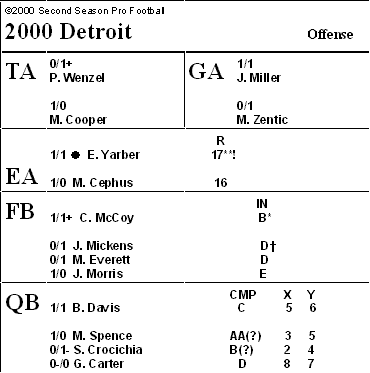
(Yearbook partial page team
sample.
All platoon members are visible on the full page.) |








 Second
Season Pro Football Game
Second
Season Pro Football Game




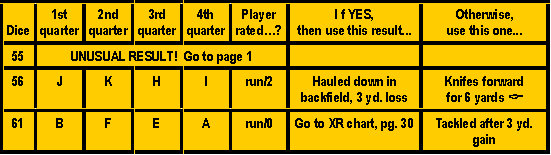


 4)
Checking result "56," we are directed to defensive player "J," the
left defensive tackle, Greg Baldinger. The game book asks us if
Baldinger is a superior run defender--and we see that he is! That
means that Baldinger breaks into the Detroit backfield and hauls
down McCoy for a three yard loss! (Had he not been a superior
defender, McCoy would have slipped past Baldinger for a six yard
gain!) Baldinger gets a high-five as the players un-pile, and
Detroit now faces second and thirteen.
4)
Checking result "56," we are directed to defensive player "J," the
left defensive tackle, Greg Baldinger. The game book asks us if
Baldinger is a superior run defender--and we see that he is! That
means that Baldinger breaks into the Detroit backfield and hauls
down McCoy for a three yard loss! (Had he not been a superior
defender, McCoy would have slipped past Baldinger for a six yard
gain!) Baldinger gets a high-five as the players un-pile, and
Detroit now faces second and thirteen.





